
Power of Innovation 2025-2026: HEALTH

Shaping the future of health and care
Edinburgh is uniquely positioned to shape the future of health and care due to the convergence of key elements that drive innovation: world-leading research, clinical colocation at the Edinburgh BioQuarter, Scotland’s rich health data and governance, and supercomputing power through EPCC. The statistics show this advantage at work with half of all investment into Universityassociated companies in health-related ventures and 52% of research funding for commercialisation directed to health.
In addition, health licences account for 96% of this year’s £4m licensing revenue. We also saw data and AI underpinning health with 12% of research funding for health innovation projects incorporating data and AI for good. From gene therapies for brain cancer to AI diagnostics, our ecosystem is accelerating progress and unlocking health benefits for all.
50%
of investments into University-associated companies went into those shaping future health and care
52%
of industrial and translational research awards are for projects shaping the future of health and care
12%
of those combine the healthcare and data missions
Advancing health innovation
The Usher Institute is advancing innovation opportunities within the health and care ecosystem. Its award-winning building (RIAS Award 2026) hosts tenants from public, private and third sectors, generating fresh collaboration possibilities. Policy influence continues to be strong: Usher director Professor Cathie Sudlow OBE recently gave evidence to the House of Lords on AI and personalised medicine, while her 2024 Sudlow Review has been the foundation for the UK’s £600m commitment to a national Health Data Research Service. DataLoch, developed with NHS Lothian, is working alongside Scottish Safe Haven Network partners to safely streamline access to de-identified health and related data across Scotland, while Scottish Collaborative Optometry-Ophthalmology Network e-research (SCONe) has securely collected over 1m retinal images for the NeurEYE project, which aims to predict dementia risk through high street eye tests. Usher academics are working with Edinburgh Innovations to further develop consultancy opportunities for industry.
Collaborating for public service reform
The Scottish Prevention Hub, a collaboration between Police Scotland, Public Health Scotland and the University of Edinburgh’s Futures Institute, entered its third year. By connecting data, research, leadership and resources across organisational boundaries, the Hub is developing and testing new approaches to collaborative working, aiming to embed prevention at scale and support lasting public service reform.
AI can diagnose faster
Edinburgh researchers have developed a stain-free AI platform that identifies blood cells and detects bacterial infection within minutes, using only a basic microscope. By removing costly reagents and specialist dependence, it could bring rapid diagnostics to hospitals and low-resource settings alike, with potential to transform time-critical care such as sepsis.
Trogenix: galloping from research to in-human trials
Spinout Trogenix is targeting incurable brain cancer.
Founded in 2023 on more than a decade of research led by Professor Steve Pollard, its gene therapy platform is already in clinical trials for glioblastoma, where only 5% of patients survive beyond five years.
A recent Nature paper reported that a single dose eliminated tumours in mice, with no toxicity and no recurrence.
In October 2025, the company closed a £70m Series A, one of the largest biotech Series A financings in Europe. The round was led by IQ Capital, with Eli Lilly participating, and was Cancer Research Horizons’ largest investment in any company.
The Phase I/II ADePT trial in glioblastoma began in May 2026 at NHS Lothian and Ohio State University Hospital.
Edinburgh Innovations supported company formation and intellectual property protection, while Old College Capital, the University’s venture investment fund, made its largest ever Seed-stage commitment.
Trogenix has built a compelling, AI-enabled programmable medicine platform that is now rapidly being used in multiple other solid cancers.
Soft robotic wearables for better rehabilitation
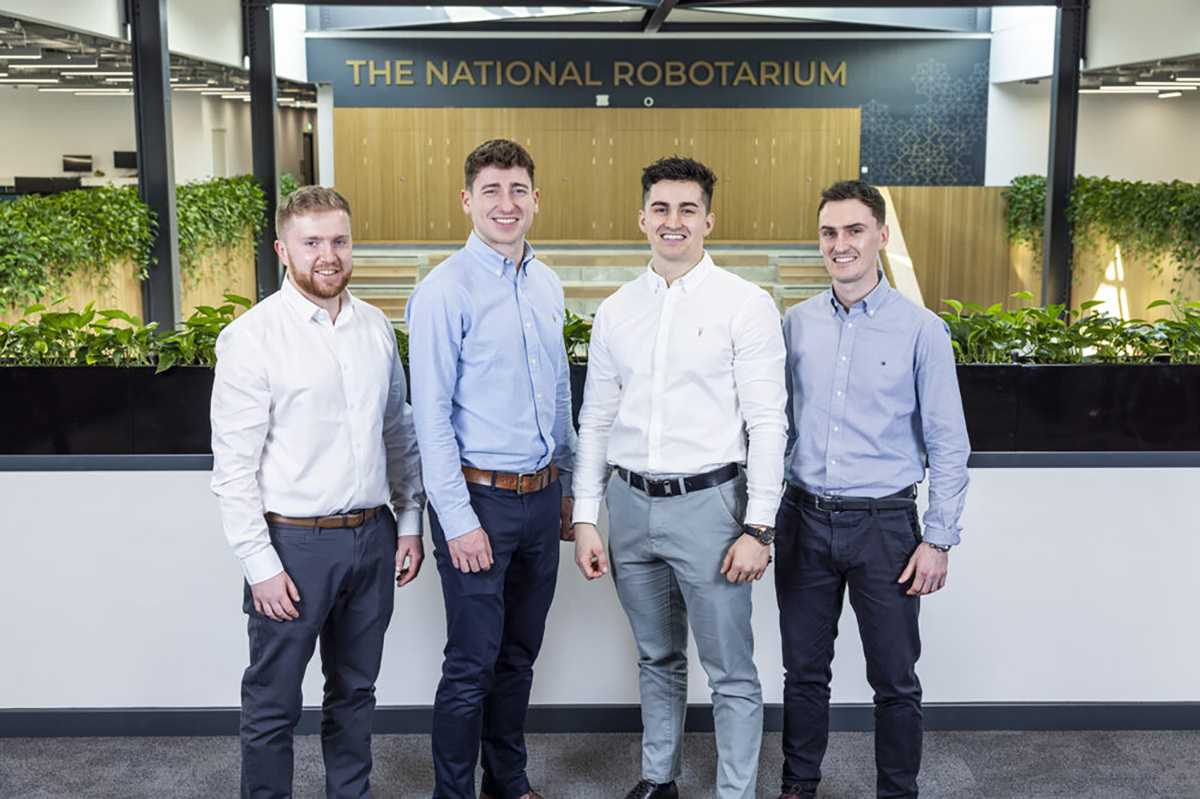
Bioliberty, a health tech company that began as a University of Edinburgh student startup, secured £7.7m in Series A funding in March to accelerate product development and international growth. The round was led by a £3m investment from the Scottish National Investment Bank, with backing from existing investors Archangels, Eos Advisory, Old College Capital (the University’s in-house venture fund) and Hanna Capital SEZC, plus new investor Conduit Connect.
Founded in 2019 by Engineering graduates, with support from Edinburgh Innovations and early investment from Old College Capital, Bioliberty combines AI with softrobotic wearables to help therapists deliver higher-intensity rehabilitation while capturing objective recovery data. Its technology is already used in leading US rehabilitation facilities.
The funding will sustain manufacturing in Fife and product development in Edinburgh, create high-value Scottish jobs, and support expansion from its Boston base. It also enables new AI-driven assessment tools and home-based therapy, extending the impact of University research into better patient outcomes.
Soft robotic Wearables
£7.7m
secured in Series A funding
Cell therapy offers hope for advanced liver disease

Spinout Resolution Therapeutics, founded in 2020 by Professor Stuart Forbes, is turning University of Edinburgh research into a potential treatment for end-stage liver disease, where options are severely limited and transplants depend on scarce donor organs. In the MATCH trial, 70% of patients given macrophage therapy were alive without a transplant after four years, compared with 40% receiving standard care. The company dosed the first patient in the Phase I/II EMERALD study of RTX001, an engineered version of the therapy, at the Royal Infirmary of Edinburgh in October 2025. Early results show patient tolerance and efficacy in clinical outcomes.
The 20-minute test improving MND care worldwide
The Edinburgh Cognitive and Behavioural ALS Screen (ECAS), developed at the University of Edinburgh, replaced a two-hour neuropsychology assessment with a 20-minute assessment that healthcare professionals can deliver at home or in clinic. It identifies the distinct cognitive and behavioural changes that affect around half of people with motor neuron disease (MND), so they receive appropriate care and support.
As the ECAS spread worldwide, unprotected versions and unvalidated translations threatened standards. Working with Edinburgh Innovations, Professor Sharon Abrahams introduced free non-commercial licences for healthcare services and universities, commercial licences for pharmaceutical trials, and a training and certification programme renewed every two years.
Available in 28 languages, the ECAS is now used in clinical care and in trials such as MND-SMART, giving researchers and drug developers comparable data across sites and helping clinicians tailor support to each patient’s needs.
Prothea’s lung imaging technology shows promise
Edinburgh spinout Prothea Technologies reported firstin- human results for its lung cancer imaging technology. In a 21-patient study, molecular signature changes appeared in 17 of 18 malignant lesions, with no device-related adverse events and under five minutes added per procedure. Supported by Edinburgh Innovations through research, IP protection, company formation and Old College Capital investment, Prothea aims to detect and treat lung cancer in one visit.
Partnering for better biological medicines
A longstanding partnership with FUJIFILM Biotechnologies has led to the co-development and licensing of new enzyme ShunzymeX™. Turning University research into a marketready purification tool for biological medicines enables developers to reach Investigational New Drug status faster. The University and company-backed research partnership supports the UK’s life sciences economy and can help treatments reach more patients worldwide.
Forth: A new hope for fibrosis
Forth Therapeutics, launched in 2024 from University of Edinburgh research, is developing antibody drugs that target fibrosis. Severe liver fibrosis currently has no effective treatment beyond transplantation, affecting millions worldwide. With a lead candidate heading towards clinical trials in 2027, the spinout has already created 13 skilled jobs and could offer patients a precision therapy and new hope.
Reversing Rett syndrome with gene therapy
Licensing of a University of Edinburgh gene therapy is helping to bring a potential treatment for the devastating condition Rett syndrome to patients.
Rett syndrome is a rare neurodevelopmental disorder, primarily affecting girls, with no effective treatments. In 2007, Sir Adrian Bird’s lab showed that restoring the MECP2 gene reversed symptoms in mice. His team then developed a compact “minigene” that fits inside an AAV delivery vector that is administered by lumbar puncture. Edinburgh Innovations helped patent the invention, and in 2018 the technology was licensed to US biotech Taysha Gene Therapies for clinical development.
The resulting therapy, TSHA-102, has now received FDA Breakthrough Therapy designation. In June 2026, interim trial results showed all 12 patients aged 6 to 21 regained at least one developmental milestone, averaging 26 functional improvements in daily activities, and the treatment was well tolerated. It has now been given to 33 patients.
The FDA has agreed to a 6-month interim analysis, which Taysha Gene Therapies expects to complete in the first half of 2027.
Licensing revenue
96%
of licensing revenue is for health-aligned licences
Nuvectis
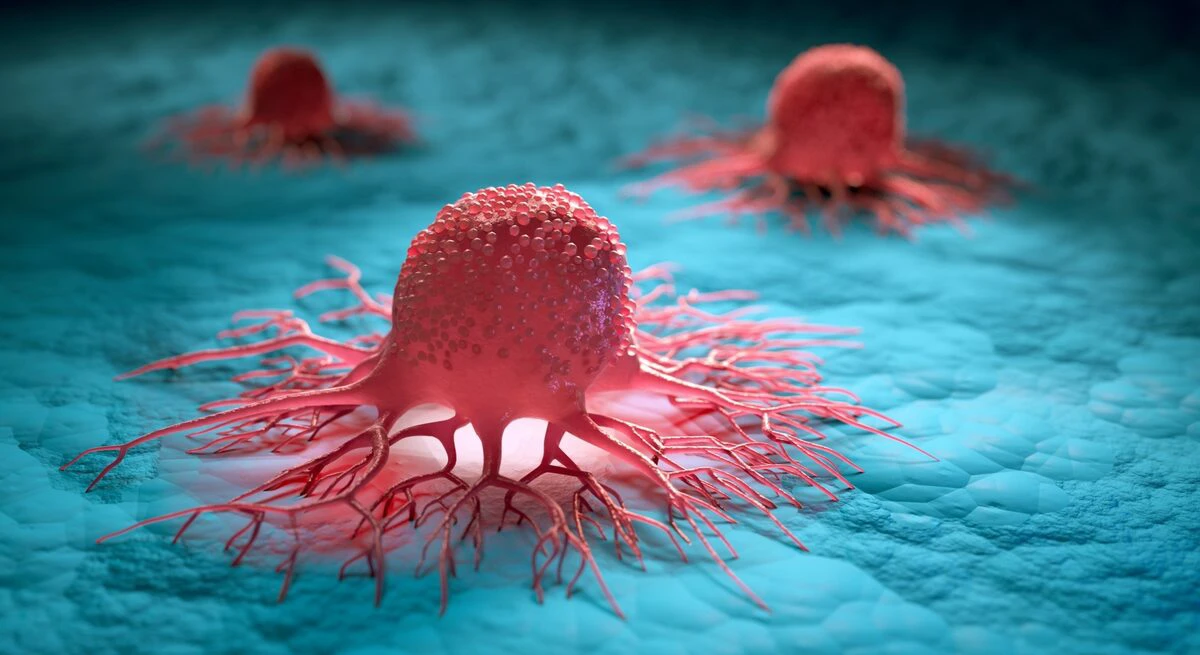
Ten years of Edinburgh research produced NXP900, a drug candidate for hard-to-treat cancers. Licensed to Nuvectis Pharma in 2021, it has now completed Phase 1a and druginteraction studies, showing it is well tolerated and reaches therapeutic levels. Phase 1b trials will test it in drug-resistant lung and pancreatic cancer patients.
