
Power of Innovation 2025-2026: Climate & environment

Turning Scotland’s waters into low-carbon heat
Heating and cooling account for over 40% of UK energy use, and many coastal communities still rely on costly oil and gas. New spinout SeaWarm is changing that. Its compact, modular heat exchangers draw natural warmth from seawater, rivers, lochs and minewater, and can cut emissions by up to 90% while lowering energy bills. The same technology can also provide cooling, opening further global markets.
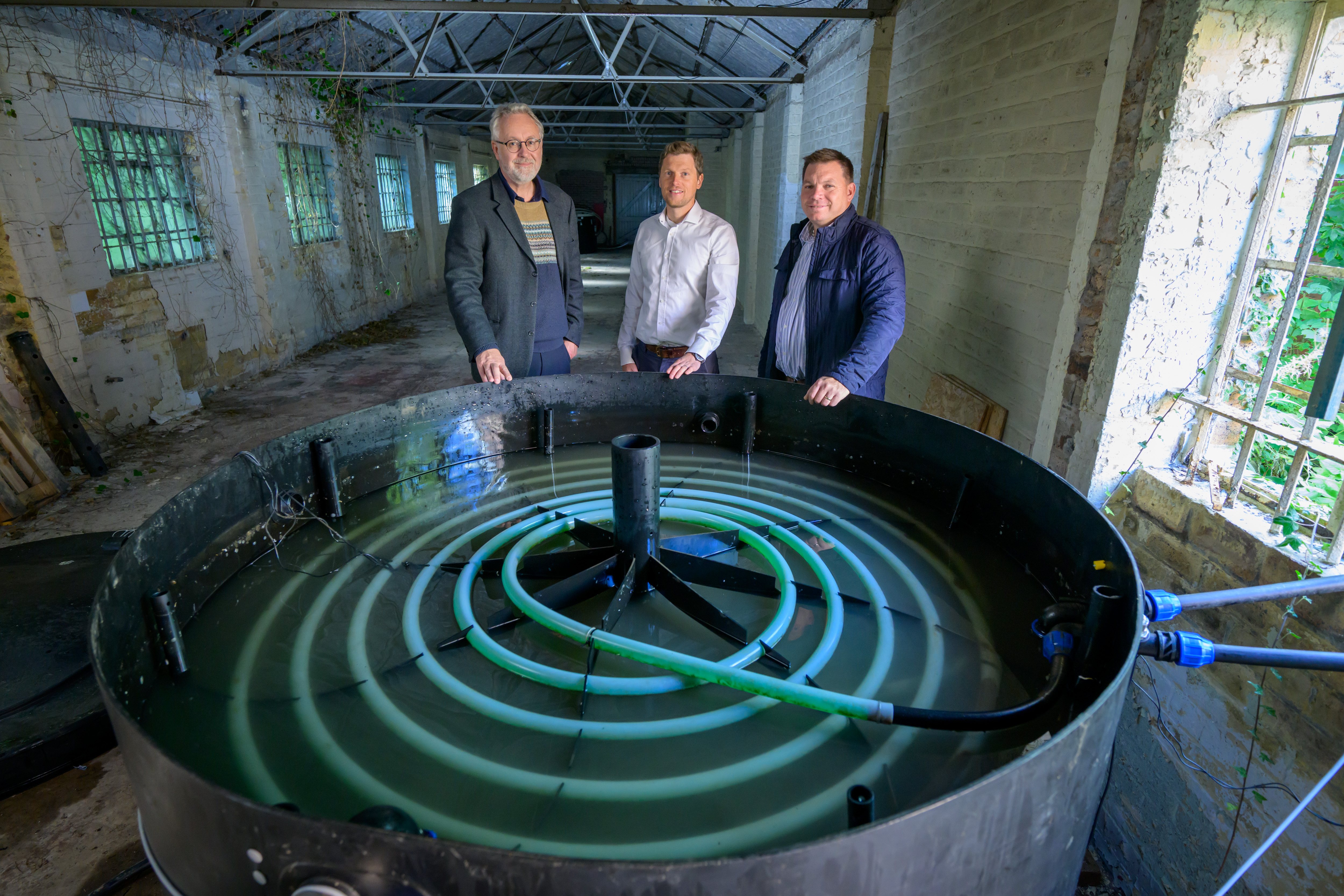
Supported by Edinburgh Innovations, SeaWarm secured £550,000 from Scottish Enterprise, angel investors and the University’s venture fund, Old College Capital (OCC). Demonstration sites include a marina, a housing development and a museum, and the company aims to avoid 20,000 tonnes of emissions over five years while easing fuel poverty.
“Our mission is to bring affordable, renewable heating to communities most exposed to rising costs and carbon-intensive systems. Scotland’s coastal communities are our immediate focus,” said co-founder Professor Christopher McDermott, School of GeoSciences.
Engineering biochar for fuel and clean water
A decade ago, research at the University of Edinburgh’s School of GeoSciences became Carbogenics, a spinout now tackling climate change, drought and food insecurity. Early backing from Old College Capital, the University’s venture investment fund, and Scottish Enterprise was vital to the company’s early development and growth.
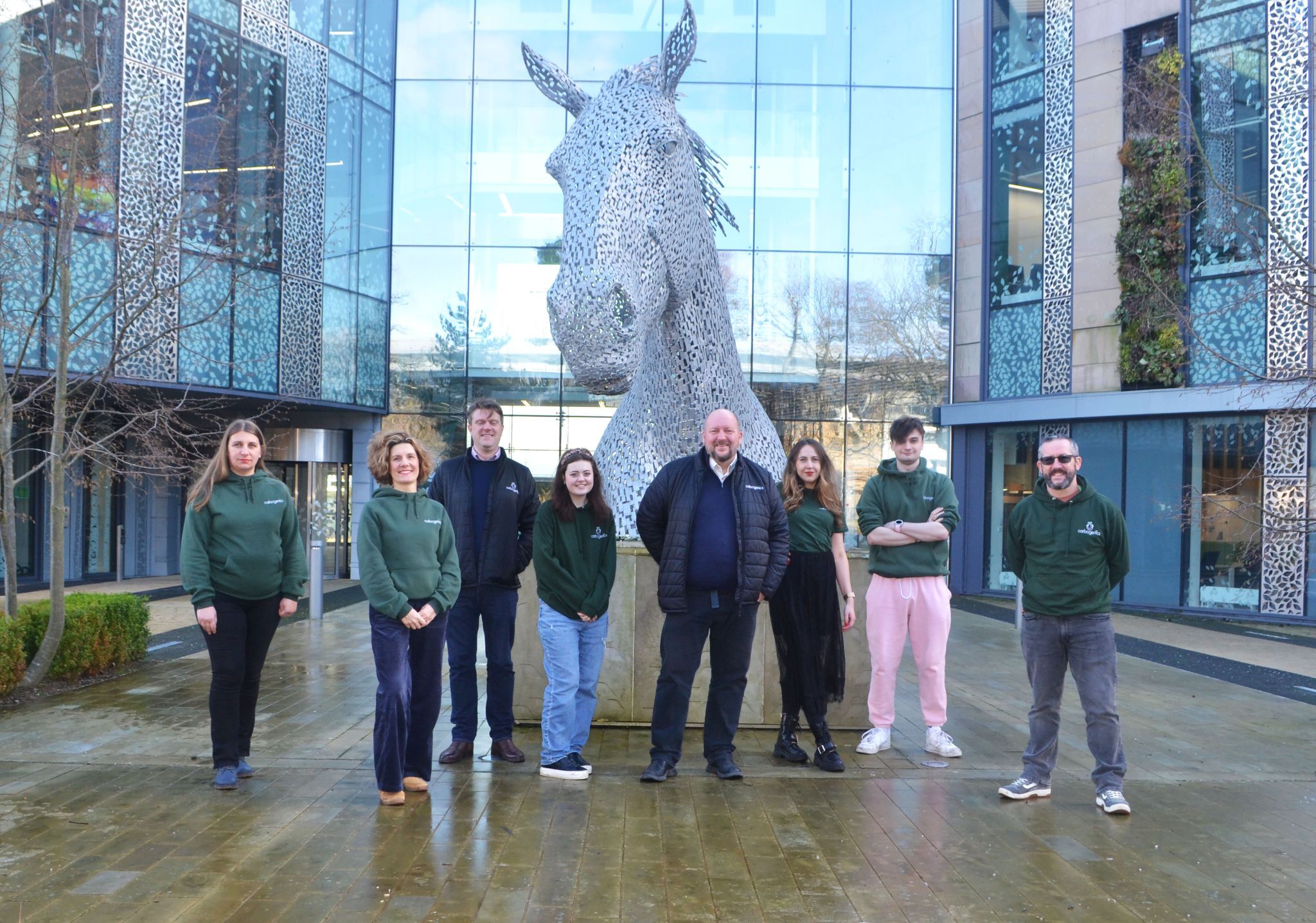
Today, Carbogenics engineers biochar from waste, including firedamaged trees and water-industry screenings, for different uses. Its patented CreChar boosts biogas production, supporting efforts such as Denmark’s plan to replace natural gas. FilaChar, a patent-pending product, offers a cheap way to treat polluted water, including the 22m barrels of toxic water generated daily in the Permian Basin through fracking. In soil, biochar can increase crop growth and cut water use by up to 20%.
With facilities in Roslin and New Mexico, where surplus heat will power the nearby town of Raton, the company is now seeking $20m in Series A funding to expand further.
Biotech startup brings new green jobs to Grangemouth
Sustainable biotechnology company MiAlgae broke ground on its Grangemouth plant in December 2025, backed by £3m from the UK and Scottish Governments. As the first new project at Grangemouth since the refinery closed, it later secured £2.5m from the Scottish National Investment Bank, and is now producing tonnes of DHArich, fish-free, Omega-3 powder from algae, grown using the byproducts of whisky distillation. MiAlgae expects to grow its workforce from 60 to approximately 156 by the end of 2028.
Douglas Martin was studying synthetic biology at the University of Edinburgh when he founded MiAlgae in 2016. Edinburgh Innovations helped him launch the business, win its earliest grants and awards, and pitch to investors, while the University’s venture fund, Old College Capital, continues to back it.
Start up stats
£3m
from the UK and Scottish Government
£2.5m
from the Scottish National Investment Bank
Cheaper carbon removal, lighter wind turbines, smarter cooling: projects driving climate and environmental impact
The Regen Innovation Catalyst Proof of Concept Fund pilot launched last year to accelerate development and de-risking of technologies and other solutions that have potential to reduce environmental harm and restore nature.
Edinburgh Innovations (EI) supported three projects through the initial funding round:
- Highly cost-efficient and scalable biochar-based carbon capture and removal solution
- Superconducting electrical winding capable of improving cost and feasibility of offshore wind energy generation
- Data centre cooling technology that uses waste heat to deliver substantial energy and water savings
Charlotte Lee-Woolf, Climate and Environment Mission Lead at EI, said:
“ The commercial readiness of these solutions has been advanced – in areas such as prototype development and market validation – thanks to funding and support provided to help translate innovations out from the lab and into the world.
“ With 2026/27 Regen Innovation Catalyst funded projects soon to be announced, we look forward to continuing to build our pipeline of promising solutions in support of our climate and environmental mission.”
Clean heat storage for industry
Clean tech spinout Exergy3 raised £10m in seed funding in April to scale its energy storage technology.
The round was led by Axeleo Capital, alongside Bayern Capital and Kibo Invest. Existing investors Scottish Enterprise, Zero Carbon Capital and Old College Capital, the University’s in-house venture fund, also participated.
Invented by Dr Adam Robinson of the School of Engineering, Exergy3’s energy storage system converts surplus renewable electricity, such as curtailed wind power, into hightemperature heat for industrial use. The technology addresses a growing challenge for the UK energy system. The country spent £2.7bn balancing the grid last year, while industrial heat remains one of the most difficult sources of emissions to decarbonise. By linking the storage of surplus renewable electricity with industrial heat demand, Exergy3 aims to help reduce wasted energy, lower industrial emissions and improve the resilience of energy supply.
The technology has been trialled and adopted at Annandale Distillery in south-west Scotland, which is using it to produce one of the world’s first low-carbon whiskies.
Fungi-based technology
Biotechnology company Rhizocore secured £4.5m in November to scale its fungi-based technology for forestry and woodland restoration. Its RhizoPellets™ help saplings absorb more nutrients and water, delivering a 97% survival rate versus 78% for untreated trees in Forestry and Land Scotland trials. Funds will expand production and enter North America.
A circular economy
Hamish Creber studied biochar at Edinburgh. Now his startup, Black Bull Biochar, has sold 11,000kg of its novel product to the University, treating over 430,000 trees at Barvick Burn Wood in Perthshire. It’s Europe’s largest area-based biochar deployment, supporting the University’s Forestry and Peatland programme, which will sequester over 1m tonnes of carbon.
Subsurface exploration
Mantis Geophysics, founded by Georgios Papageorgiou, spun out this year, utilising AI to revolutionise subsurface exploration. Its technology, which models seismic wave behaviour, provides cost-effective alternatives to physical surveys in fields like geothermal energy and carbon capture. The team took part in the University’s AI Accelerator programme.
C-Loop: a green revolution in manufacturing and mining
The Carbon-Loop Sustainable Biomanufacturing Hub (C-Loop), launched in March 2026, is advancing industrial collaborations that could transition manufacturing away from fossil fuels.
Professor Stephen Wallace’s lab is working with an industry partner to use E. coli bacteria to make a Parkinson’s disease drug from waste plastic bottles. The lab has also developed a carbon-negative hydrogenation process using waste bread, with partners including University of Edinburgh startup MiAlgae, feedstock manufacturer C-Source Renewables and microbiology company NCIMB Ltd.
Professor Louise Horsfall is contributing to C-Loop by investigating routes to recycling microbial fermentation waste. In addition, her team is collaborating with a company on bacterial strains to recycle lithium-ion batteries from electric cars. Another project has produced strains that make palladium nanoparticles suitable for catalysis at lower temperatures than current methods. The lab uses microbes to extract rare earth metals from rock and, with bioleaching companies, it is developing strains to be used as an alternative to energy-intensive mining.
Improving solar power
Graduate startup SolarSub raised £1.34m to scale its passive cooling technology, which keeps solar panels at optimal temperatures without pumps or moving parts. Trials recorded energy gains of up to 19%. Backed by Old College Capital and supported by Edinburgh Innovations, the funding will drive deployments starting with floating solar.
Cleaner metal recovery
The University licensed its Gold Copper Diamide Extraction process to mineral processing company Lithium Universe. Developed by Professors Jason Love and Carole Morrison, it uses reusable organic compounds to recover gold and copper from e-waste at low temperature, avoiding smelting, cyanide and mercury. The exclusive worldwide licence will bring cleaner metal recovery to the circular economy.
A burning issue
Wildfires increasingly threaten lives, property and ecosystems. Through consultancy and industry partnerships, the Edinburgh Fire Research Centre is turning satellitebased prediction and drone-led detection into practical tools for fire agencies, land managers and infrastructure operators. This work helps protect communities and nature, reduces avoidable economic losses and builds long-term resilience to a rapidly growing global threat.
