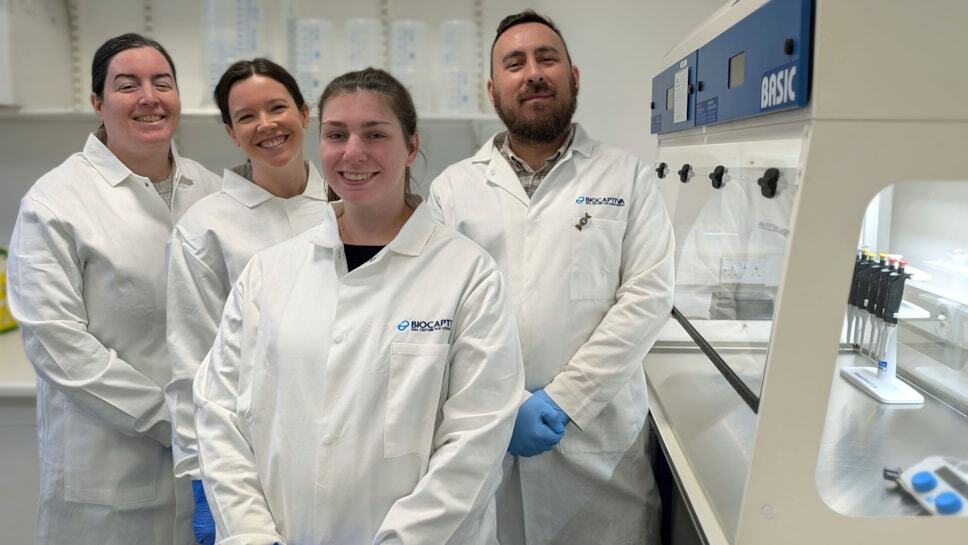
BioCaptiva: new biopsy technology detects cancer early
Biocaptiva
Global market
A recent report shows the global liquid biopsy market growing by a compound annual rate of 33% and projected to be worth more than $6 billion by 2025.
This new technology will be of interest to companies that are developing novel cancer tests limited by current methods of extracting circulating free DNA (cfDNA), where the higher yield achieved by the new device will increase the sensitivity of their detection methods.
BioCollector technology
The spinout has developed a next-generation “liquid biopsy” technology that captures cfDNA from patients’ blood in much greater quantities than is possible through the current standard of a single blood draw, overcoming a significant current limitation of cancer liquid biopsy testing.
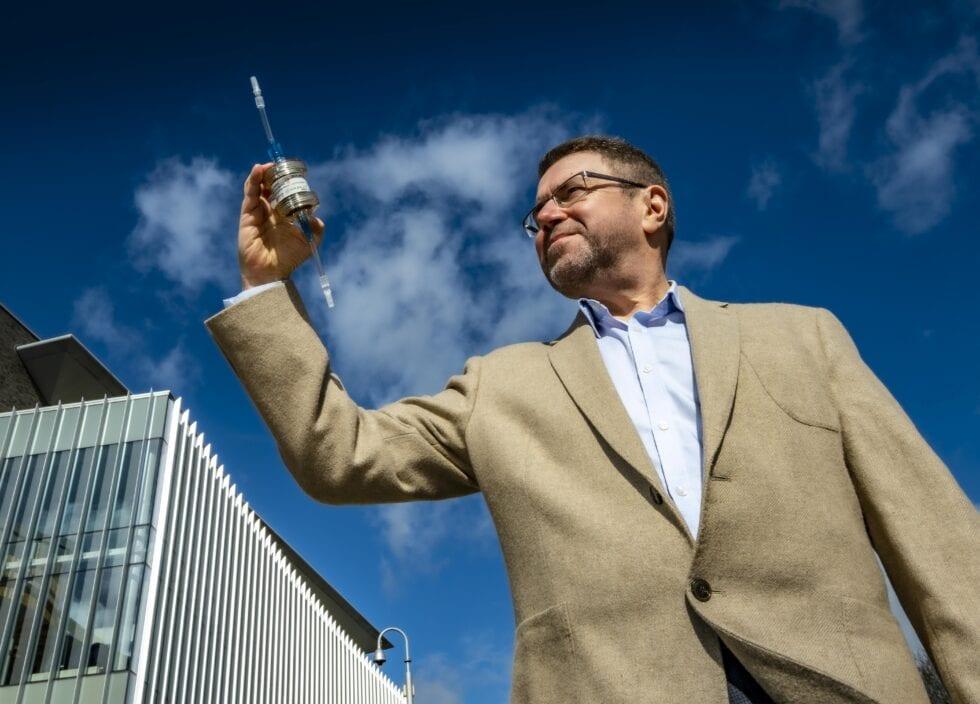
Named BioCollector, the device works alongside a standard apheresis machine, filtering cfDNA from the patient’s blood system.
BioCollector is based on a decade of research led by Professor Tim Aitman, Director of the Centre for Genomic and Experimental Medicine, and Professor Mark Bradley of the University’s School of Chemistry.
I’m delighted that after several years of work with colleagues in Edinburgh, we will now progress towards first-in-human trials. BioCollector will provide a step change in the capabilities of liquid biopsy for cancer detection and diagnosis.
We are excited to be moving our device into this market with its huge potential for advances in the care of patients with cancer.
Tim Aitman
Director of the Centre for Genomic and Experimental Medicine, University of Edinburgh
Prototype to clinical trials
Prototypes indicate the potential to detect early-stage cancers in patients without the need for surgical biopsy. The BioCollector also promises new approaches for monitoring minimal residual disease and detecting disease recurrence, resulting in better patient outcomes.
With Edinburgh Innovations’ support BioCaptiva has attracted more than £1 million in seed investment from Edinburgh-based investment syndicate Archangels and Scottish Enterprise.
The seed investment will enable BioCaptiva to carry out its first trials to prove its safe use in humans. Should the technology prove successful, BioCaptiva plans to scale up its technology ahead of regulatory clinical trials, scheduled for completion during 2024.
BioCaptiva has very exciting prospects in an important field, based on the leading research of Edinburgh scientists.
The launch of this company, with such solid investment support, promises to improve many people’s lives.
George Baxter
CEO, Edinburgh Innovations
Edinburgh Innovations continues to support Biocaptiva as an engaged shareholder, with the position managed by EI’s Investment Team. For more information about how the University manages its shareholdings in early-stage companies, read about the Edinburgh Technology Fund.
If you are interested in this technology or in exploring how Edinburgh Innovations can support innovation in your organisation, please get in touch.
Related links

Interested in learning more?
Speak to our expert

Susan Bodie
Director of Innovation

Susan Bodie bio
Susan Bodie
Director of Innovation
Development & Licensing

Susan joined the University as a Business Development Executive in 2013, supporting the College of Medicine and Veterinary Medicine. She moved to Edinburgh Innovations in 2019 and became Business Development Manager before being appointed as Head of Business Development for CMVM in summer 2021.
With an honours degree in Pharmacology and PhD in physiology and cell signalling, Susan’s background is in drug development. As a new graduate, Susan started her career as Study Director at Charles River Laboratories (then Inveresk) where she worked with all major pharma, biotech and chemical companies to support drug development, specifically the studies required to prove the safety of new chemical entities in both preclinical and clinical studies.
The opportunities for translation at the University of Edinburgh across all three Colleges are significant. The potential for industrial interest to accelerate translation and utility in society is both exciting and a source of motivation for my team and me. Rapid developments in AI, data, health, social policy and technology at the University can create real benefits and change lives enabled via increased knowledge exchange. Uncovering innovative ideas and connecting with partners makes this a great time to be involved in research translation.